
Scheduled Alerts Setup Guide
In this article, you'll learn how to set up Scheduled Alerts in Enjo to receive recurring notifications for issues that match your configured conditions.
Before you start
You need Owner or Admin role in Enjo.
At least one helpdesk app must be connected to your workspace. See Enjo App Integrations.
Create a Scheduled Alert
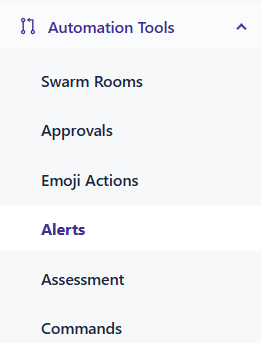
Step 1 — Open Alerts
Go to Automation Tools > Alerts.
Click New Alert in the top right corner.
Step 2 — Select your helpdesk
Select the helpdesk app and account you want to create the alert for.
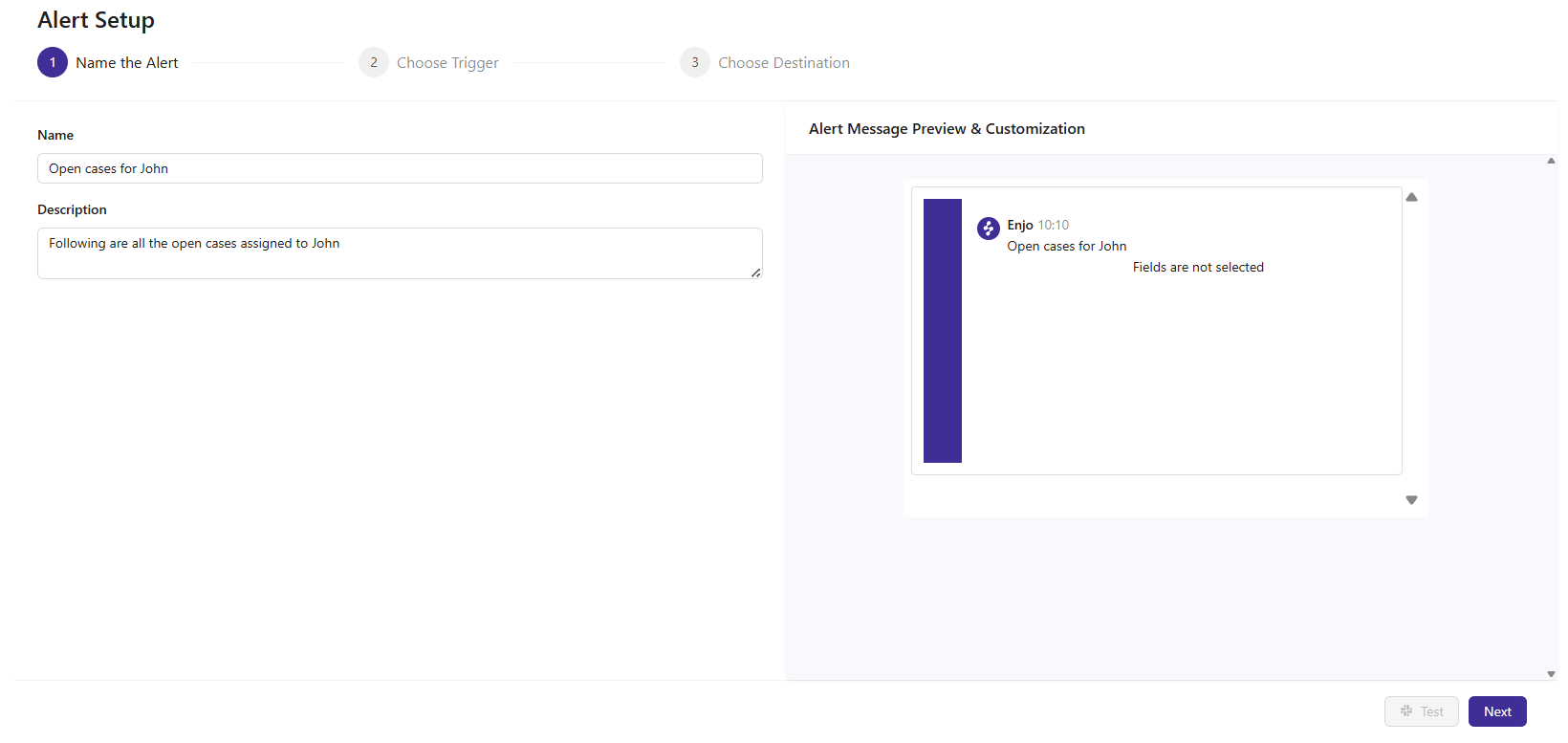
Step 3 — Name your alert
Enter a unique Alert Name.
Add a brief Description to help identify what this alert tracks.
Click Next.
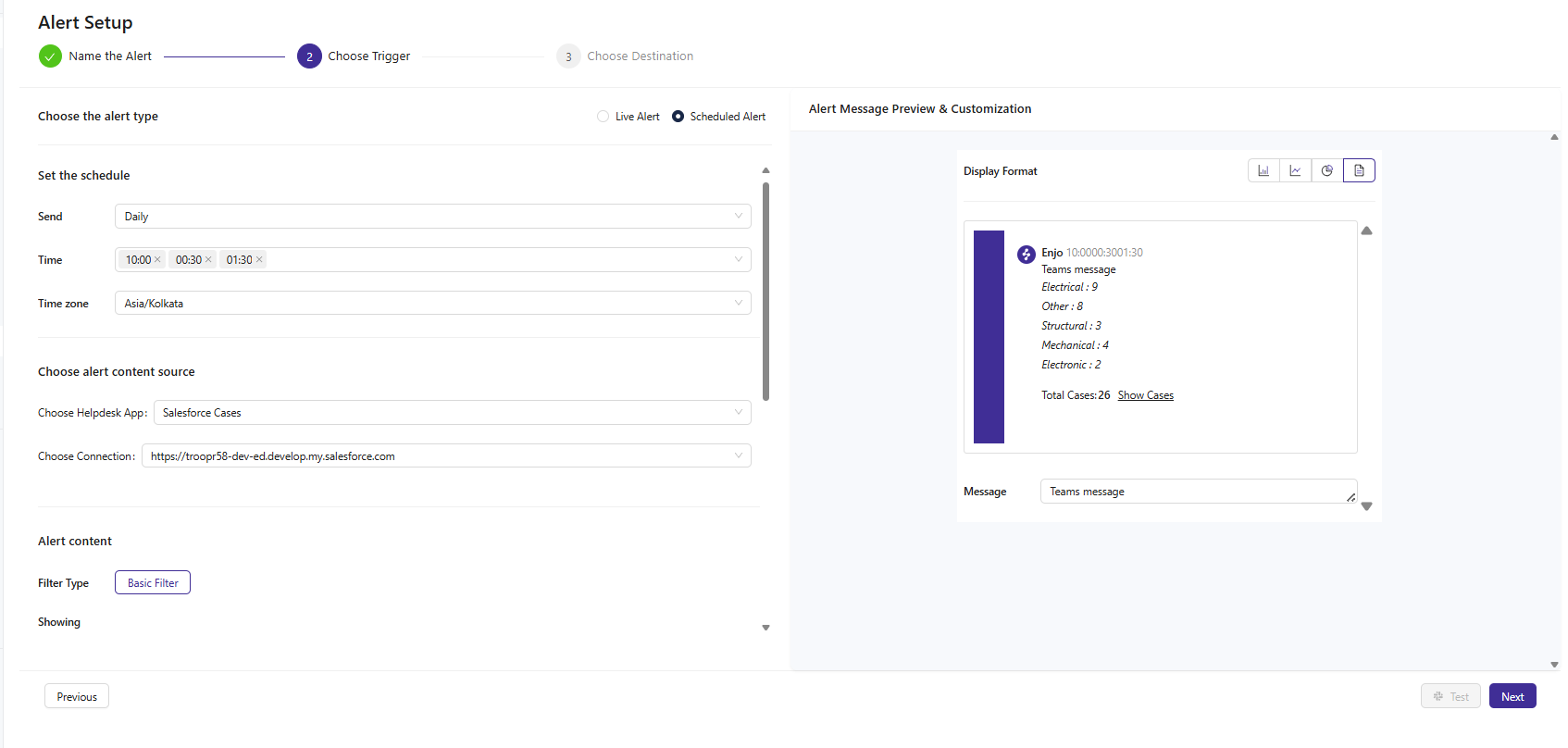
Step 4 — Configure trigger and content
Alert type Select Scheduled Alert as the alert type.
Scheduling Set when and how often you want to receive the alert:
Frequency — Daily or Weekly. For weekly alerts, select one or more days.
Time — Set up to three time slots for delivery.
Content source Choose the helpdesk app and connection to fetch data from.
Alert content Select the data to include in the alert. Customise the display format for the alert message:
Format | Best for |
|---|---|
Bar chart | Comparing values across categories |
Line chart | Tracking trends over time |
Pie chart | Showing proportional breakdowns |
Summary text | Plain text digest of key metrics |
💡 Use the preview section to see how the alert will appear before sending it.
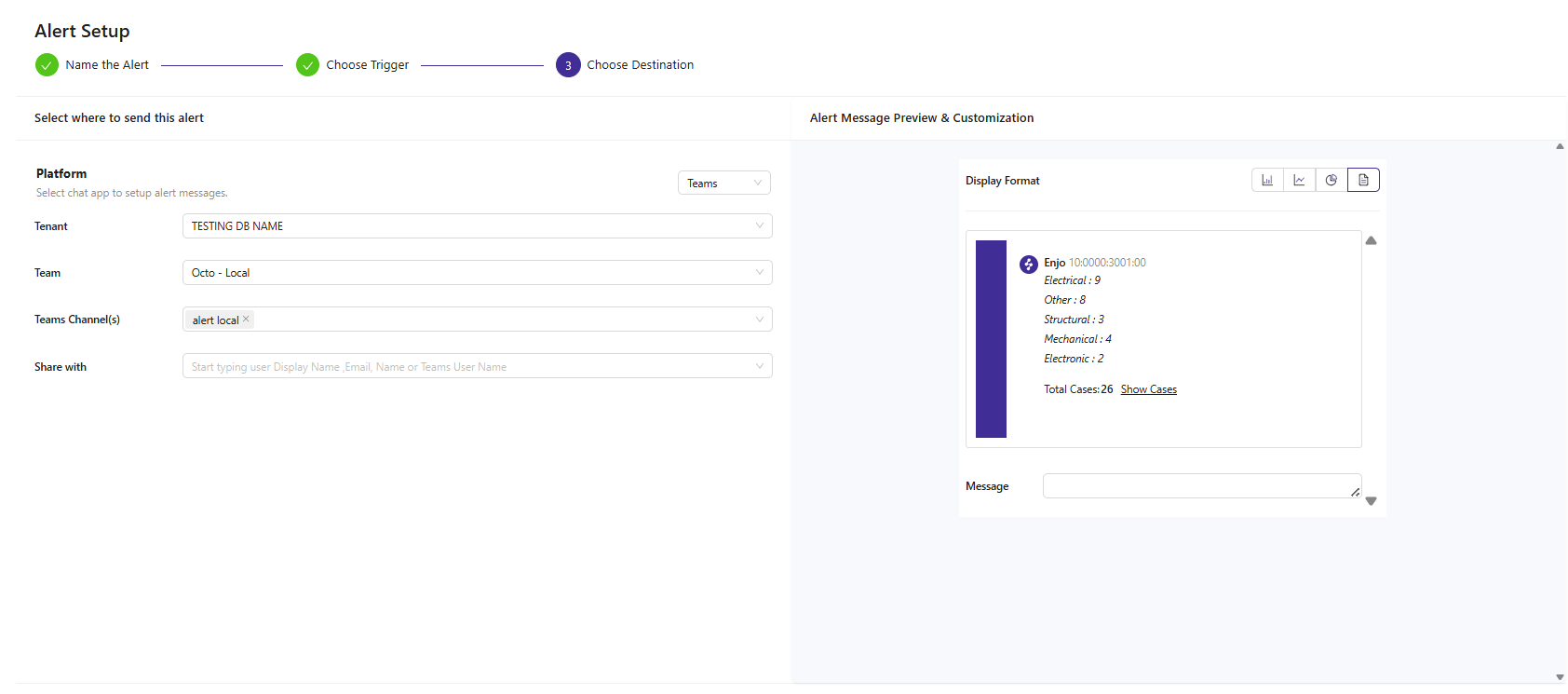
Step 5 — Choose destination
Platform Select where you want to receive the alert — Slack or Microsoft Teams.
Delivery Choose how to deliver the alert:
Send to a channel for team-wide visibility
Send as a personal DM using the Share With feature for individual delivery
Step 6 — Test and create
Click Test to preview a mock version of how the alert will appear when sent.
Once satisfied, click Create Report to activate the alert.
💡 Always test your alert before creating it — this confirms the data, format, and delivery channel are configured correctly.
What's next
Live Alerts Setup Guide — Configure real-time notifications triggered by specific conditions.
Alerts — Overview of both Scheduled and Live Alert types.
Emoji Actions — Trigger workflows by reacting to messages with emojis.
Commands — Trigger actions or create tickets via slash commands in Slack or Teams. Test